
Pisces I: The Dollhouse
Mutable water: tiny artefacts, dreamscapes, hidden moons
Atmosphere: The Dollhouse
Sign: Pisces
Plant: Pomegranate
Planet: Jupiter + Saturn
Dates: 19 - 29 February
Tarot: 8 of Cups
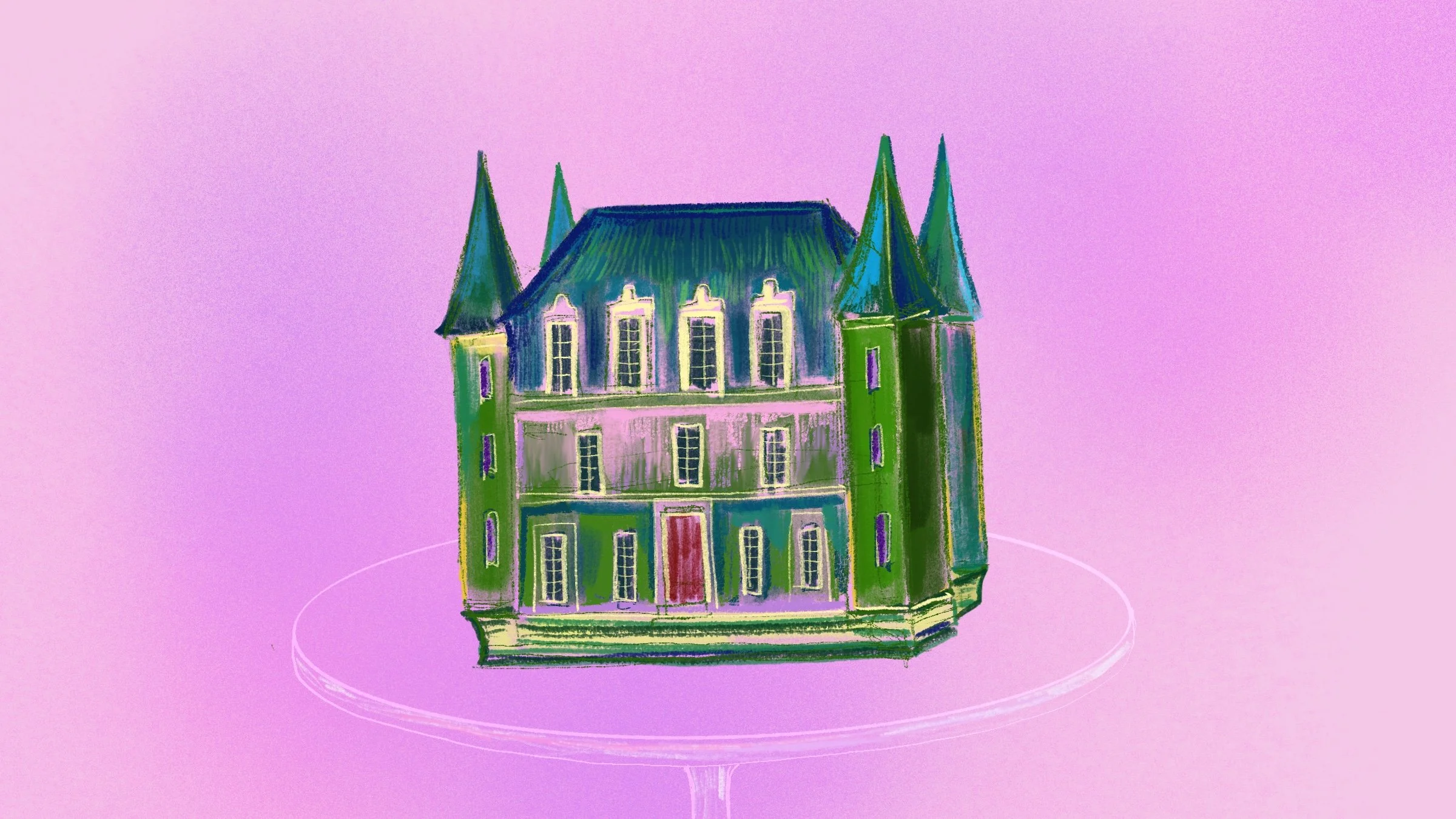
I’m too big for my dollhouse
Don’t get rude don’t get too proud
Hand on my throat can’t get air out
Eyes on the floor keep my head down
And I’m a selfish girl
I’ll close my eyes and lie to you
I’ll put myself first
Cause you don’t know what I’ve been through
– Helen Sun, ‘A Melody, a Lie’
Pisces I takes us deep into our imaginations and dream worlds.
Stephen Forrest calls Pisces the sign of ‘the realm of the undersea sierras, of luminous plankton, of lost cities’.
This ability to go very deep into worlds of imagination is both a consolation and a rich resource for Pisces. As Stephen Forrest writes:
Empathy and gentleness are Piscean resources too. Personality is flexible in the Fishes. It bends and flows, adapting to changing situations. Understanding other people, feeling compassion for them, comes easily. The Fihses simply imagine that they were in the other person’s position. Effortlessly, they seek to locate that alien subjectivity within their own fluid awareness.
This particular decan, Pisces I, is ruled by Jupiter and Saturn, and, as such, it is concerned with questions of scale.
Both Jupiter and Saturn represent excess – Jupiter is the planet associated with expansion while Saturn is the planet of the outer limits.
What Pisces offers is a way to change the scale; to create tiny artefacts from cosmic incidents so that we can understand them more deeply.
Austin Coppock calls this decan ‘The Labyrinth’. He writes that:
Beneath the waves, deep within the labyrinth of images and constructs, lies a revelatory truth—we have always existed in this structure, but we are only now discovering it. When pursued consciously, this phase involves a quest to map the invisible walls of reality, to find the subtle structures which guide human life. Here we see the practice of psychoanalysis, and divinatory attempts to discern the structure of fate. It is a slow, groping cartography of an invisible maze.
The use of miniatures, models, dioramas, and dollhouses in pop culture is often to explore this very question – what happens when you wake up to the fact that you have always existed in this structure but you finally discover it?